A selection of tools
Drawn from depth psychology and idealist philosophy, particularly the work of Jung, Hegel and Schelling.
Shadow Dialectics
The shadow, inner and outer shadow work, power, and quality, quantity and direction.
Read below ↓Applying the theoryThe Shadow Map™
The dynamics of your psyche and personality, laid out in five positions.
Explore the map →Day to dayThe Seven Habits of Individuation
Seven principles for becoming who you are, each with three facets.
Read below ↓The shadow
That which is difficult to confront in ourselves.
Put simply, it is everything about ourselves we don't like, and because we don't like it, we don't look at it.
Read more
The shadow forms in early life, and for good reason: while we are dependent on others, we set these parts aside, to some extent and for some time, in order to get our needs met. That isn't a mistake in itself, though beyond a point it becomes one.
Everything has a dark side: the Sun, economic growth, kindness, you. Becoming anything at all means leaving something out: traits, emotions, desires, beliefs, even the ways we perceive the world and make decisions. Every personality implies a shadow.
The shadow isn't only what is bad in you. It also holds what you need in order to become whole. We tend to admire in others the light form of what we have disowned: if you disown laziness, you might admire easygoingness; if you disown ruthlessness, you might admire efficiency.
What a personality leaves out comes back
Your personality is a thesis that forms in stages. What it leaves out comes back, in your life and in the world around you, and irony and self-contradiction always point to it.
The person who insists on utmost kindness in all situations will be the most unkind to you when you don't fit their idea of what kindness is.
The person who insists on absolute efficiency will be the most inefficient in their ruthlessness.
The person who insists that whatever disturbs you is your own projection drops the principle whenever someone admires them.
Any thesis taken to its extreme must run to its opposite. The Greek philosopher Heraclitus called this enantiodromia, "running to the opposite", and Jung returned to it many times.
Two sides of the same task
In yourself
Coming to terms with what is difficult to confront in yourself, including the ways you serve power.
In the world
Coming to terms with what is difficult to confront in the world, such as harm done by others, to you and to other people.
Inner work is outer work, and outer work is inner work.
Many approaches collapse the two, or leave one out.
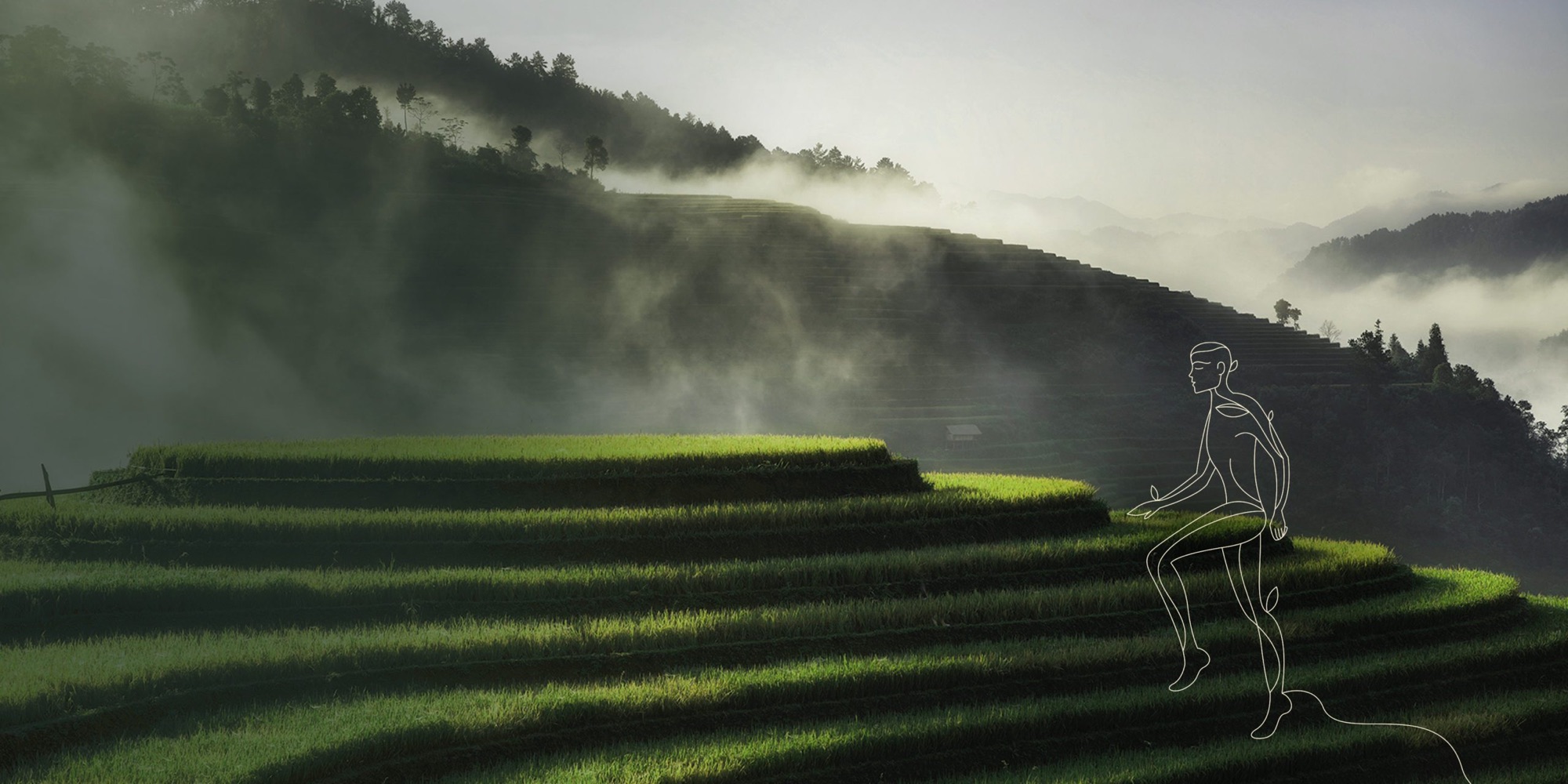
Deep down, what we all want is freedom, but a lot of the time we settle for mere power instead.
On the surface the two can look alike, and at first power can be the more tempting, because it appears the easier way. The difference is that freedom is inseparable from responsibility, while power tries to get away from it.
Read more
Power in itself is not the problem. In the neutral sense, power is will: the ability to make things happen and uphold any thesis, whether a belief, an idea of yourself or a way of operating. In the negative sense, it is serving that thesis at any cost, throwing out empathy and any real willingness to engage with anything that lies outside it.
Quality, quantity and direction
Many of the confusions around shadow and shadow work arise from the conflation of three different dimensions.
What it is
The specific preference, trait or behaviour.
How much
The magnitude with which it is expressed.
In service of what
The intention with which it is applied.
Efficiency and ruthlessness share a quality. In one sense, ruthlessness is efficiency taken to its extreme, a difference of quantity. It also differs in direction, because the energy is used only in the service of itself.
Any trait can be used in the service of power and the violation of freedom, not only those judged to be bad. That is one way it goes unnoticed. Another is that nearly everyone believes their intentions are good, even when, unconsciously, they aren't.
Five positions
The Shadow Map™ applies Shadow Dialectics to the dynamics of your psyche and personality. Here it is with kindness as the Conscious Thesis.
The eight functions
Personality Dynamics applies the Shadow Map™ to the eight cognitive functions Carl Jung described. Make it Conscious gives each a character name, so they are easier to recognise and can be worked with in active imagination.







Embracing, tempering and reconciling your two core functions gives the six Development Pathways for your personality in the app. Each pathway's practices come from the Seven Habits of Individuation: each function is matched to the facets that help develop it, so your pathways show which practices will develop your personality in particular.
The Seven Habits of Individuation
A method for becoming who you are. They are not rules to be followed, but principles to be understood.
Self-knowledge doesn't develop on its own. Becoming undivided in yourself is the result of what you do each moment of every day: the choices you make, your intention and your willingness to take responsibility.
Each habit has three facets, twenty-one in all. The habits are practical, but they are also tools for thinking.
They work like lights on the dashboard of your mind.
When you find you can't do one, or simply aren't doing it, that points to unconscious content worth looking at. Tap a habit to see its three facets.
Intellectual understanding helps, but it doesn't resolve a contradiction on its own.
The opposing sides have to be made conscious, and the tension of opposites borne, for the contradiction to be reconciled. Active imagination is one of the main places this happens. You invite a feeling, a figure or a part of yourself to appear as a symbol, and engage with it in a two-way dialogue.
In coaching, and in the app
Make it Conscious coaching draws on these tools. The Method is also what the AI Guide in the Make it Conscious app is trained in, so it asks you questions as well as answering yours.
Alongside it, the app has guided active imagination exercises recorded by Max, a question each morning, a place for your dreams and Development Pathways for your type.